
Northwest Indiana sits inside a corridor that sees some of the Midwest’s most severe summer storm activity, and derechos, fast moving bands of thunderstorms carrying sustained straight line winds over a wide area, are a real part of that. Lake, Porter, and LaPorte counties have all seen major wind events in recent years, severe enough to knock out power across whole communities, damage homes structurally, and in some cases cause injuries and deaths. This isn’t a once in a generation risk for this region. It’s a seasonal one, and it’s worth understanding before the next one hits, not after.
If your home has already been through a severe wind event, our first priority isn’t selling you a roof. It’s making sure you and your family are safe, and that you understand what to actually do next. The roofing guidance is further down. Read the safety section first.
Safety Comes Before Anything Else
If a severe wind storm has just come through, walk your property with a few things in mind before you start worrying about shingles.
Treat every downed power line as live, even if it looks dead, and keep kids and pets well away from it. Report it to your utility rather than trying to move it yourself. If a tree has come down on your home, or you notice sagging in the roofline or ceiling, stay out of that part of the house until someone’s actually inspected it, a roof hit hard enough by derecho force winds can have structural damage that isn’t obvious just from looking. If you smell gas anywhere near the house, leave immediately and call your utility from a safe distance, don’t flip a light switch or do anything that could spark on your way out. And if there’s standing water anywhere near downed lines or exposed wiring, stay out of it until the power in the area is confirmed off or safely restored.
Once you and your family are actually safe and those hazards are handled, the rest of this guide covers what to do about the roof itself.
What a Derecho Actually Is, and Why It Damages Roofs Differently
A derecho is a widespread, long lived windstorm tied to a fast moving band of thunderstorms, and what sets it apart is sustained straight line wind covering a large area, rather than the tighter, swirling damage a tornado leaves behind. That distinction actually matters for your roof.
Straight line winds tend to hit an entire roof surface with sustained force coming from one general direction, instead of the twisting, localized destruction you’d see from a tornado. In practice that often means shingle loss spread across large sections of roof rather than one corner, uplifted or peeled back material along ridges and edges, and damage to flashing and roof mounted equipment like vents or satellite mounts, sometimes across an entire neighborhood at once instead of just one property.
Derecho events in this region have sometimes arrived alongside confirmed tornadoes inside the same storm system. When that happens, the damage pattern across an area gets genuinely mixed, some homes show the classic wind uplift pattern, others show something more concentrated and severe that looks more like a tornado track. Either way, it takes a real inspection to tell which one you’re actually dealing with.
Why Northwest Indiana Sees This Kind of Storm
The region’s flat terrain and its position along the southern edge of Lake Michigan put it inside a well documented Midwest storm corridor, the same general path that carries derechos across Illinois and into Indiana and Ohio during peak summer storm season, roughly May through August. The lake itself adds another variable, since storm systems can intensify quickly as they cross the water and make landfall. None of this makes severe wind damage a guarantee every single year, but it does make it a realistic risk worth planning around instead of something that catches homeowners here by surprise.
What to Look For on Your Roof
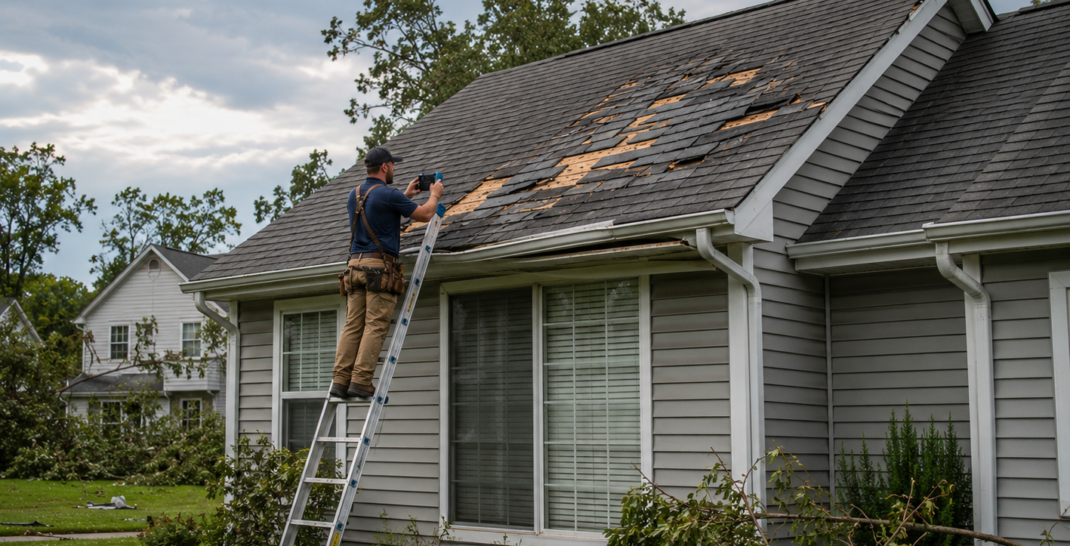
Once it’s actually safe to look, whether that’s from the ground with binoculars or a professional up on the roof, here’s what derecho related damage tends to look like. Missing or torn shingles usually show up first, especially along roof edges, ridges, and corners where wind uplift hits hardest. Shingle edges that are lifted or curled are worth catching too, even where nothing looks obviously missing, because a lifted seal lets water in on the next rain regardless of how fine the roof looks from the street. Flashing around chimneys, vents, and skylights can get damaged or pulled loose. Dented gutters, downspouts, or roof vents are a good early clue that the shingles took a hit too, even if that’s not visible yet. And if there’s debris scattered across the roof and yard, tree limbs, siding fragments, shingle pieces, chances are the roof took some of whatever caused that.
When a storm hits a wide area at once, getting a real inspection matters more than usual, not less. It’s easy for damage to just blend into “everyone’s roof looks a little rough right now” instead of getting flagged as something that actually needs documented repair.
Temporary Protection While You Wait for Repairs
After a widespread event, full repairs and replacements aren’t going to happen for everyone overnight, and that’s a reasonable thing to plan around rather than panic over. If your roof has exposed decking or missing sections, temporary tarping is the priority. It’s not a fix, it’s protection against the next rain while you wait for a real repair or for your claim to move through the process.
A poorly secured tarp in continued high wind can honestly do more harm than good, tearing loose and taking shingles with it, so this is worth having someone experienced handle rather than doing it yourself if you can avoid it. If a contractor offers emergency tarping as part of their storm response, ask whether that’s included in the eventual repair cost or billed separately, since it varies and it’s better to know upfront. And hang onto receipts and photos of any temporary protection you put up. Insurers generally expect homeowners to take reasonable steps to prevent further damage, and documenting that you did protects your claim instead of working against it.
Repair or Replace: What Wind Damage Usually Means
After derecho force winds, a lot of homeowners end up facing a real decision between a targeted repair and a full roof replacement, and the honest answer comes down to how widespread the damage actually is, not which option a given contractor happens to prefer selling.
A repair usually makes sense when the damage is contained, a section of missing shingles, one damaged vent boot, an isolated flashing issue. Full replacement becomes the more sensible call when damage is spread across multiple roof slopes, when the roof was already aging before the storm hit, or when wind uplift was severe enough to loosen the nailing pattern across a large section of decking underneath. A legitimate roof repair and replacement inspection should tell you clearly which category your home actually falls into, and explain the reasoning, rather than defaulting to whichever option costs more.
Insurance Claims After a Regional Wind Event
Filing a claim after a widespread storm comes with a few realities worth knowing upfront. Insurers see a real surge in claims after regional events like this, and when a lot of homes are affected at once, adjusters get stretched thin and response times slow down. That’s a reason to document your damage thoroughly and file promptly, not a reason to wait until things calm down.
Photograph everything before any temporary repairs go up, roof, gutters, siding, downed trees on the property, anything storm related. That record protects your claim no matter how long it actually takes an adjuster to get out to your property. Most homeowners policies cover sudden wind and storm damage, though the specifics, deductibles, and exclusions vary policy to policy, and damage from ordinary wear and tear gets treated differently than sudden storm damage, which is part of why the timing of your documentation matters so much.
A contractor who’s actually walked roofs alongside adjusters before tends to know what gets missed in a quick assessment, and can document damage in a way that actually supports your claim instead of just describing it in general terms. For the full breakdown of the claims process, deductibles, and what insurers typically ask for, see our complete guide: Storm Damage Roof Repair in Indiana: The Complete Insurance Claim Guide.
Watch for Storm Chasers
After any major regional storm, it’s common for out of state crews to start going door to door within days, offering fast repairs at low prices. Some of them do fine work. A lot of them are gone once payment clears, or once a warranty on rushed, poor quality work would actually need to be honored. This pattern shows up predictably after every major wind event in this region, and it’s worth being cautious about, especially in that first week or two after a bad storm when this kind of activity peaks.
A roofing contractor with a real local address and an actual track record in the community before the storm hit is one that’s still around to call afterward. Our guide on hail and wind damage roof repair goes into more detail on telling a legitimate local repair apart from a rushed one, and our guide to choosing a residential roofing contractor covers what to actually check before hiring anyone, storm response or otherwise.
Serving Homeowners Across Northwest Indiana
We work with homeowners throughout the counties most exposed to this kind of storm activity, including Michigan City, Crown Point, Valparaiso, and Beverly Shores. If you’re not sure whether your roof took wind damage, a free inspection is the fastest way to find out. If your siding took damage in the same storm, which is common with straight line winds, our siding installation guide covers what to look for there too. You can also read more about how we handle storm related insurance claims on our storm and insurance services page.
FAQ
What’s the difference between derecho damage and tornado damage on a roof?
Derecho damage from straight line winds tends to be more widespread and consistent in direction across a roof surface, and often shows up across an entire neighborhood at once. Tornado damage tends to be more concentrated and severe along a narrower path, sometimes hitting one home hard while a neighbor’s is untouched. When a storm system includes both, a professional inspection is really the only reliable way to know which pattern applies to your home.
When is derecho and severe storm season in Northwest Indiana?
The region’s highest risk generally runs from late spring through summer, roughly May through August, when the atmospheric conditions that produce fast moving, long lived thunderstorm complexes are most common across the Midwest storm corridor.
My roof looks fine from the ground. Do I still need an inspection after a storm?
Wind damage, especially lifted shingle seals and flashing issues, often just isn’t visible from the ground. After any storm with significant wind speeds, even a roof that looks fine is worth a professional look, particularly before the next rain finds a weak point you didn’t know was there.
Is it safe to get on my roof myself to check for damage?
Not right after a severe storm. Downed power lines, unstable trees, and structural damage that isn’t obvious from the ground make this genuinely dangerous. A ground level visual check is fine. Getting up there yourself is a job for someone trained to do it safely.
Get a Free Storm Damage Inspection
If a recent storm may have affected your home, we’re here to help you sort out what’s actually damaged, what your insurance covers, and what repair or replacement really looks like. Request a free inspection and we’ll give you a straight answer, not a sales pitch.