
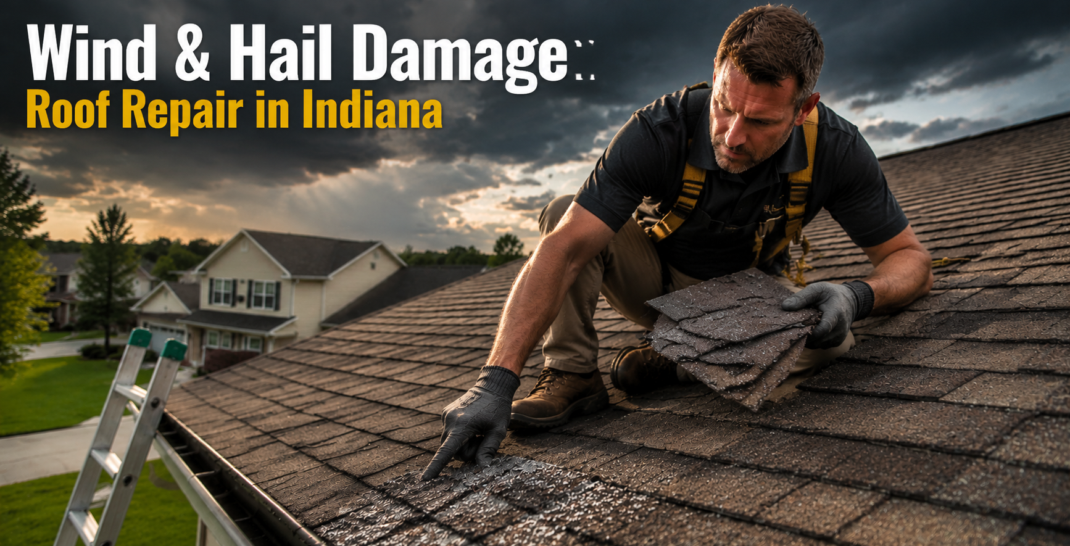
If you’ve lived in Northern Indiana for more than a summer, you already know what late spring through August can bring. Fast moving storms, hail out of nowhere, and wind gusts strong enough to strip shingles clean off a roof. We get the calls every year, usually the morning after a bad storm rolls through Michigan City, Chesterton, Crown Point, or anywhere near the lakeshore.
Here’s the problem. Most homeowners can’t tell how bad the damage actually is just by looking up from the driveway. Hail damage roof repair often gets put off simply because the roof “looks fine” from the ground, and by the time a leak shows up on the ceiling, the damage has usually been sitting there for weeks. This guide walks through what to actually look for, how insurance handles hail and wind claims in Indiana, and what a proper repair looks like once you call someone out.
Why You Shouldn’t Wait on Hail or Wind Damage
A roof doesn’t need to look destroyed to be failing. That’s the part people miss. A handful of hail bruises or a few shingles lifted in a windstorm is enough to break the roof’s seal against water. Once that seal is broken, every rain after that point works its way in a little further. What starts as a minor repair can turn into a soggy attic, stained drywall, and eventually mold if it sits too long.
There’s a money side to this too. Indiana insurance policies generally require storm damage to be reported within a certain window after the event. Wait too long, and some insurers will push back on the claim or argue the damage isn’t storm related anymore. Getting a hail damage roof repair inspection done soon after a storm protects your home and keeps your claim clean.
What Hail Damage Actually Looks Like
Hail damage is sneaky, especially on asphalt shingles. It doesn’t leave a hole you can spot from the yard. It leaves small, easy to miss signs that add up over time.
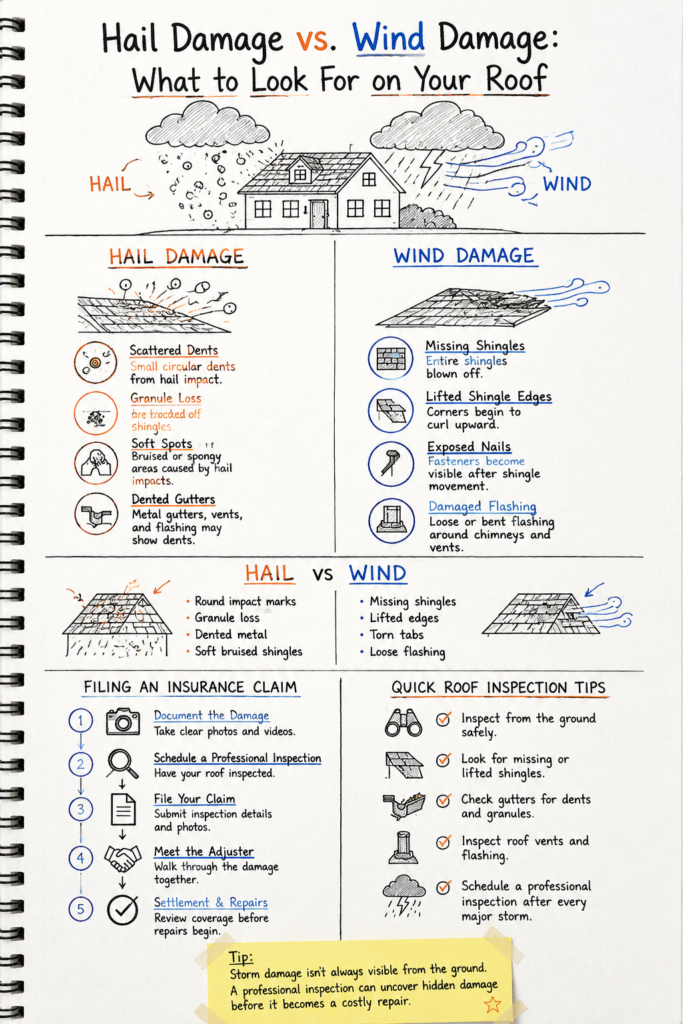
Dents and bruises usually show up scattered across the roof rather than in a straight line, and that random pattern is actually one way we tell hail damage apart from wind damage. You might also see bare or shiny patches where granules have been knocked loose, which is the shingle’s protective coating doing its job by taking the hit. Press on a bruised spot and it may feel soft, meaning the mat underneath has cracked even though the surface looks fine. Dented gutters, downspouts, roof vents, or window screens are usually a giveaway that the shingles took a beating too, even if you can’t see it from below. And if granules are piling up in your gutters after a storm, that’s shingle coating that used to be on your roof.
Because so much of this is invisible from the ground, a real hail damage roof repair estimate needs someone walking the roof, not glancing at it from the street.
What Wind Damage Looks Like
Wind is a bit more honest about announcing itself. After a windstorm, walk around the property and check for missing or torn shingles, especially along the edges and corners of the roof, where wind pulls hardest. Curling or lifted shingle edges are another sign, since that lifted edge is exactly where wind driven rain sneaks underneath. You might spot exposed nail heads where a shingle has shifted, or damaged flashing around a chimney or vent. And if there’s debris scattered across the yard, broken branches, chunks of siding, shingle pieces, there’s a good chance your roof took some of that same wind.
If any of that sounds familiar, get wind damage roof repair scheduled sooner rather than later. Indiana weather doesn’t usually give you a long dry stretch to think it over.
Hail Damage vs. Wind Damage: What’s the Difference?
Both fall under “storm damage,” but insurance adjusters and roofing contractors evaluate them differently:
| Hail Damage | Wind Damage | |
| Pattern | Scattered, random dents/bruising | Directional — worse on edges, corners, ridges |
| Visibility | Often subtle, needs close inspection | Usually visible — missing/lifted shingles |
| Common failure point | Granule loss leading to slow leaks | Broken seal leading to wind-driven rain intrusion |
| Typical repair | Shingle replacement, sometimes full roof if widespread | Shingle/flashing replacement, targeted patching |
Many Indiana storms produce both at once, which is why a full inspection after severe weather should always check for both hail and wind damage roof repair needs, not just one or the other.
How the Insurance Claim Process Works
Filing a claim for hail or wind damage isn’t complicated, but there’s an order to it that makes things go smoother.
Start by documenting the damage yourself. Photos and video of the roof, gutters, siding, even the AC unit, give you a record before anyone starts repairs. Then get a professional inspection. An adjuster will eventually come out, but having your own contractor’s assessment first means nothing gets missed or downplayed. File the claim as soon as you reasonably can, since the longer you wait, the more room there is for the insurer to question whether the damage is really storm related. If you’re able, meet the adjuster on site. A contractor who’s done this before can point out things on the roof that are easy to miss from a ladder or a drone photo. Once the settlement comes back, read it closely and make sure it covers the whole scope of the repair, flashing, gutters, any interior damage, not just a patch of shingles.
For the full breakdown on deductibles, documentation, and what insurers typically ask for, we wrote a more detailed guide here: Storm Damage Roof Repair in Indiana: The Complete Insurance Claim Guide.
What Actually Happens When You Call a Roofer
When you bring in a licensed contractor for hail or wind damage, it usually goes something like this. First, a free inspection, and a real one, meaning someone gets on the roof rather than eyeballing it from the driveway. Then a written report with photos documenting what’s damaged, which happens to be exactly what your insurance company wants to see too. If shingles are missing or the deck is exposed, temporary tarping goes up right away so the house isn’t exposed to the next rain while repairs get scheduled. From there, the contractor should walk you through whether you’re looking at a repair or a full replacement, and explain why, not just default to whichever costs more. If you’re going through insurance, a contractor who has handled hail and wind damage roof repair claims before can talk directly to your adjuster, which tends to keep the process moving instead of stalling out in paperwork.
You can get that first inspection started through our roof inspection services , or grab a free instant quote if you’d rather start there.
What Drives the Cost of Repair
No two storm repairs cost the same, but a few things tend to move the number up or down. How widespread the damage is matters most. A few dented shingles on one slope is a much smaller job than granule loss across the whole roof, which usually points toward replacement instead of a patch. The roofing material matters too. Standard asphalt is the most common and generally the cheapest to repair, while metal roofing tends to hold up better against hail and wind in the first place, which is part of why some homeowners upgrade after a rough storm season. We broke down that tradeoff in our metal roofing pros and cons post if you want to read further.
Age plays a role as well. A roof already close to the end of its life is more likely to need full replacement after a storm than one that’s only a few years old. Roof pitch and how easy the roof is to access affects labor time, and your insurance deductible determines how much of this actually comes out of your pocket. Some Indiana policies set that deductible as a percentage of the home’s insured value rather than a flat number, which is worth checking before a storm hits, not after.
The most reliable way to know your actual number is a written estimate from a licensed contractor, matched against whatever scope your adjuster comes back with.
Why It’s Worth Hiring Someone Local
After a big storm, it’s common to see out of town crews going door to door offering fast, cheap repairs. Some of them do fine work. A lot of them are gone before any problems show up, which leaves homeowners with nobody to call if a repair fails or a warranty needs honoring.
A local contractor with roots in the community is still around next year, and the year after that. Weldon Roofing has handled hail and wind damage repairs for homeowners across Northern Indiana, including Michigan City, Chesterton, Crown Point, Beverly Shores, and South Bend, and we back every repair with a real warranty from a team you can actually reach if you need us again. More on how we handle storm claims specifically is on our storm and insurance services page.
A Few Ways to Get Ahead of the Next Storm
You can’t storm proof a roof completely, but a handful of habits cut down how much damage the next one causes. Get an inspection done each spring before storm season ramps up, so any existing wear gets caught early instead of turning into a bigger problem mid storm. Keep tree branches trimmed back from the roofline so high winds don’t turn them into projectiles. Clean the gutters regularly so wind driven rain has somewhere to go instead of backing up under the shingles. And when something small shows up, a loose shingle, a soft spot, deal with it while it’s still small. It’s a lot cheaper than fixing the leak it eventually causes.
Common Questions About Wind and Hail Damage Roof Repair
Does homeowners insurance cover hail damage roof repair in Indiana?
Most standard policies do, as part of general storm or wind coverage, though deductibles and specific exclusions vary by insurer. It’s worth pulling out your policy or asking your contractor to help you read through it before you file.
How do I know if I need a repair or a full replacement after wind damage?
It comes down to how much of the roof is affected. A handful of missing shingles in one area is usually a repair. Damage spread across multiple slopes, or a roof that was already aging before the storm, usually points toward replacement. A good inspection should tell you which one you’re dealing with, and why, instead of leaving you to guess.
How fast should I get a hail damage roof repair inspection after a storm?
As soon as you reasonably can, ideally within a few days. It protects your claim timeline and keeps small damage from turning into a leak before the next rain shows up.
Can I handle wind damage roof repair myself?
Clearing debris off the ground, sure. Getting on a storm damaged roof yourself is a different story, and it’s genuinely dangerous. DIY patch jobs can also void warranties or complicate an insurance claim, so it’s usually worth leaving the actual repair to a professional.
Will filing a hail or wind damage claim raise my insurance rates?
Storm claims are generally treated differently from claims where the homeowner is at fault, such as a fire or a theft, since nobody controls the weather. Most insurers won’t bump an individual rate over a single storm claim, but it’s worth a quick call to your carrier to confirm how they handle it.
If a Recent Storm Has You Wondering
If you’re standing in your yard right now looking up at your roof trying to decide whether that’s actual damage or just shadows, get it looked at properly. Weldon Roofing offers free inspections for hail damage roof repair and wind damage roof repair across Northern Indiana. Request your free inspection or instant quote here.