
Winter in Northwest Indiana hits different. Like really different. One day it’s nice out, and the next thing you know, there’s six inches of snow on everything and the wind is howling through your neighborhood. Your roof takes the worst of it. Every single year. And most people don’t even think about it until they wake up to a water stain on their bedroom ceiling.
By then it’s kind of too late.
So if you’re sitting there wondering how to prepare your roof for winter, you’re already doing better than most homeowners around here. Seriously. Most folks just cross their fingers and hope for the best. That doesn’t really work out great when February rolls around with three feet of snow on the roof and ice hanging off the gutters like icicles on a cartoon house.
This guide is gonna walk you through what you actually need to do. No confusing stuff. No weird roofing terms you’ve never heard of. Just real simple steps that make a real difference.
Why You Should Actually Care About This
Look, I get it. Nobody wakes up excited to think about their roof. It’s up there. It does its job. You don’t really notice it until something goes wrong. But here’s the thing. Your roof is the only thing standing between your family and whatever Indiana weather decides to throw at you in January.
Heavy snow. Freezing rain. Ice storms. Wind that feels like it could rip your house apart. All of that lands on your roof first.
And here’s what most people don’t realize. A tiny problem in October turns into a huge, expensive mess by February. A small crack in a shingle lets a little water in. That water freezes overnight. Ice expands and makes the crack bigger. The next storm, more water gets in. It freezes again. The crack gets even bigger. This keeps happening all winter long, and by spring you’ve got serious structural damage that costs thousands to fix.
That’s why figuring out how to prepare your roof for winter before the cold actually shows up is so important. You’re not just preventing a leak. You’re saving yourself a ton of money and a whole lot of stress.
Clean Out Those Gutters Seriously
I know this sounds boring. I know you probably don’t want to climb up a ladder on a Saturday morning. But clogged gutters are the biggest reason ice dams happen in the first place. And ice dams are basically the worst thing that can happen to your roof in winter.
Here’s what goes down. Leaves, sticks, and random debris pile up in your gutters all fall long. When it rains, or snow melts, the water can’t flow through the downspout because it’s all blocked up. So the water just sits there on the edge of your roof. When the temperature drops at night, that standing water freezes solid. Now you’ve got a wall of ice sitting on your roof edge.
That ice wall traps more water behind it. The trapped water has nowhere to go, so it pushes up under your shingles and starts leaking into your attic and your walls. Next thing you know, you’ve got mold growing and drywall falling apart, and you’re writing a really big check to a contractor.
Clean your gutters at least twice before winter. Once in early October and again in late November after all the leaves are down. It takes maybe an hour, and it saves you from a nightmare later.
Look for Missing or Beat-Up Shingles
You don’t have to climb on the roof for this one. Just walk around your house and look up. Take your time. Look at every section of the roof from different angles.
Are there any shingles that look cracked or curled up at the edges? Any spots where shingles are just flat-out missing? Any areas that look darker or lighter than the rest?
Those are your weak spots. And winter is gonna find every single one of them.
A missing shingle is basically an open door for water. Rain and melting snow flow right into the gap and soak into the wood underneath. Once that wood gets wet and then freezes, it starts to rot and split. That’s how small problems turn into full roof replacements real quick.
If you only see one or two damaged shingles, you might be able to swap them out yourself. Hardware stores sell replacement shingles, and it’s not super hard if you’re handy. But if you see a lot of damage or you just don’t feel comfortable getting up on a ladder, then call someone who knows what they’re doing. Weldon Roofing handles roof repairs all over Westville and the surrounding areas. We’d much rather come out and fix a small issue now than deal with a massive emergency in the middle of a blizzard.
Cut Back Those Tree Branches
Big trees look great in the summer. But in winter those same trees can wreck your roof. When snow and ice pile up on branches, they get incredibly heavy. One strong gust of wind and a heavy branch snaps right off and crashes down onto your shingles.
Even if the branch doesn’t break off completely, it can still cause problems. Branches that hang close to your roof scrape against the shingles every time the wind blows. That constant rubbing wears off the protective granules on the shingle surface. Once those granules are gone, the shingle breaks down way faster than it should.
So grab some trimmers or call a tree service and cut back anything that hangs within a few feet of your roof. It’s one of those things that takes an afternoon but prevents damage that could cost you thousands.
Check Your Attic Insulation and Airflow
Most homeowners never think about their attic when they think about their roof. But your attic actually plays a huge role in how your roof handles winter weather.
If your attic doesn’t have enough insulation, the heat from your house rises up and warms the underside of the roof. That heat melts the snow on top. The melted snow runs down to the edge of the roof where it’s colder and freezes into ice. That’s how ice dams start. And as we talked about earlier, ice dams are bad news.
Go up in your attic and take a look. Is the insulation spread out evenly, or are there thin spots? Are the vents along the soffits and the ridge clear, or are they blocked by insulation or old boxes? Good airflow keeps the roof surface cold and stops the snow from melting unevenly.
This is one of those things that makes a bigger difference than people think. Proper attic ventilation can literally be the difference between a roof that survives winter just fine and one that ends up with major ice dam damage.
Don’t Forget the Flashing
Flashing is the thin metal pieces around your chimney, skylights, and roof vents. They seal the gaps where different parts of the roof come together. Without good flashing, water sneaks right into those joints and causes leaks.
Over time, flashing can rust or pull away from the roof surface. The sealant around it dries out and cracks. Take a close look at these areas before the cold sets in. If you see gaps or rust, or loose metal, get it fixed right away. These spots are super vulnerable once snow and ice start piling up.
Get a Professional to Take a Look
Honestly, even if you do everything on this list, you’re probably gonna miss something. That’s just how it goes. You’re not a roofer, and you’re not supposed to be. A trained eye catches problems that most homeowners walk right past.
If you’re still trying to figure out how to prepare your roof for winter, the easiest thing you can do is schedule a free inspection. At Weldon Roofing & Construction, we come out and check every part of your roof, from the shingles to the flashing to the gutters to the attic ventilation. We tell you exactly what needs attention and what’s fine. No pressure, no upselling. Just honest feedback from a local roofing contractor in Westville, Indiana, that actually cares about doing good work.
Signs You Need to Call a Roofer Right Now
Don’t wait if you see any of these things happening around your house.
- Water stains showing up on ceilings or walls
- Shingles scattered in your yard after a windy day
- Any part of your roofline that looks like it’s sagging
- Light coming through the roof boards when you’re in the attic
- Tons of shingle granules washing out of your downspouts
These are all red flags. And once winter hits, they get way worse way faster. Getting ahead of the problem is always cheaper than dealing with the emergency later.
Wrapping It Up
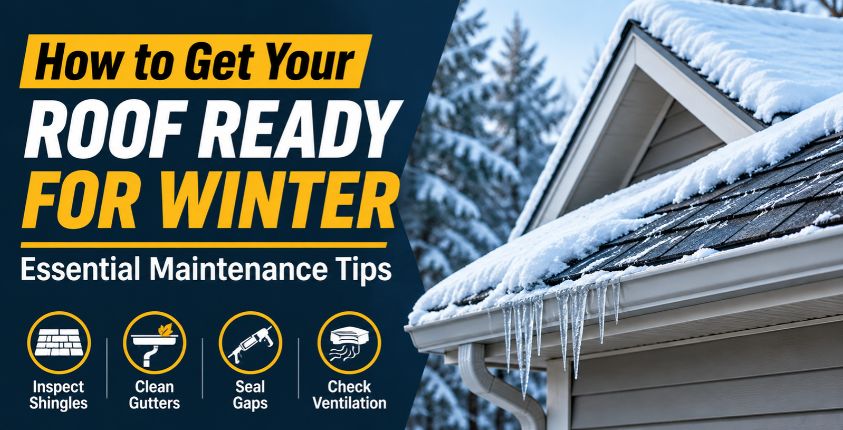
Getting your roof ready for winter doesn’t have to be some huge, overwhelming project. Clean the gutters. Fix the broken shingles. Trim the trees. Check the attic. Look at the flashing. And if you’re not sure about something, just have a pro come take a look.
Your roof protects everything you own. Taking a Saturday afternoon to get it ready for the cold months is one of the smartest things you can do. The little bit of effort now keeps you from dealing with expensive surprises when the snow starts falling.
If you’re in Westville or anywhere around Northwest Indiana and you want a free roof inspection before winter gets here, give Weldon Roofing & Construction a call. We’ll make sure your roof is ready to handle whatever Indiana throws at it this year. And trust me, Indiana always throws something.
FAQs
1. When should I start prepping my roof for winter?
Start in September or early October. That gives you time to handle any repairs before the first hard freeze. If you wait until December, you’re kind of playing catch-up, and some repairs are harder to do in freezing temps.
2. Can I do this stuff myself?
Some of it, yeah. Cleaning gutters and trimming trees you can handle on your own. But for inspecting shingles, checking flashing, and looking at ventilation, it’s better to call a pro. We see things most people miss, and the inspection is free anyway, so there’s no reason not to.
3. What’s an ice dam and why should I care?
An ice dam is a ridge of ice that forms on the edge of your roof. It traps water behind it, and that water leaks under your shingles into your home. They happen because of poor attic insulation and clogged gutters. They cause a ton of damage if you don’t deal with them fast.
4. How much does a roof inspection cost?
Nothing if you call Weldon Roofing. We do free inspections for homeowners in Westville and all around Northwest Indiana. No cost, no obligation. We just want to help you avoid problems before they get expensive.
5. Is it too late if winter already started?
It’s not ideal, but no, it’s not too late. We can still do emergency repairs in cold weather. Just don’t wait around. The longer you ignore a problem, the worse it gets and the more it costs to fix. Call us as soon as you notice something off, and we’ll get out there fast.