
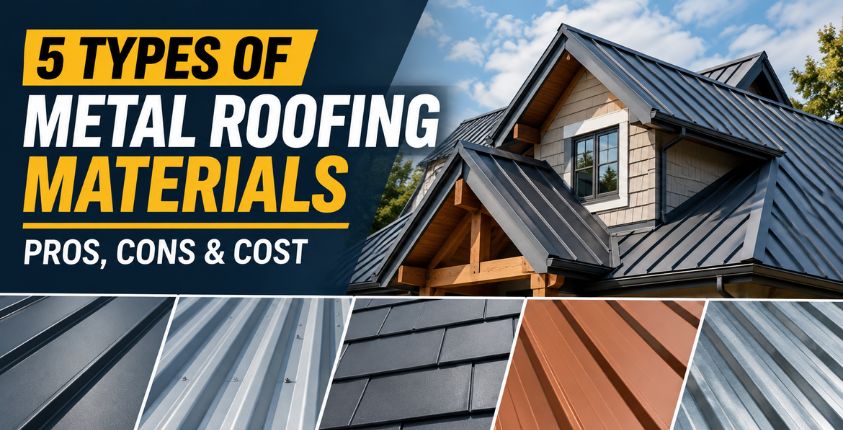
Metal roofing isn’t one product; it’s a category. The types of metal roofing available today, steel, aluminum, copper, zinc, and tin, differ in weight, lifespan, appearance, and metal roofing cost, and picking based on the word “metal” alone is how homeowners end up with a roof that doesn’t actually fit their house or their budget.
Understanding the different types of metal roofing before you talk to a contractor puts you in a much stronger position. You’ll know what questions to ask, what tradeoffs actually matter for your specific home, and whether you’re paying for more material, or less durability, than you need. Here’s a full breakdown of all five, what they’re good at, where they fall short, and how their cost compares.
Quick Comparison
|
Material |
Typical Lifespan |
Metal Roofing Cost Tier |
Best For |
|
Steel |
40-60+ years |
Most affordable |
Budget, availability, fire resistance |
|
Aluminum |
40-60+ years |
Mid to upper |
Coastal/moisture exposure, low weight |
|
Copper |
60-100+ years |
Premium |
Longevity, distinctive patina |
|
Zinc |
80-100+ years |
Premium |
Longevity, self-healing patina |
|
Tin |
Not sold today |
Not applicable |
Historical reference only |
1. Steel Roofing
Steel is the material most people picture when they hear “metal roof,” and among the different types of metal roofing available today, it’s by far the most commonly installed, usually as standing seam panels or metal shingles coated with a protective zinc or aluminum-zinc layer to resist rust.
Steel earns its popularity honestly. It’s the most affordable option in this category, it carries a Class A fire rating, and a properly coated steel roof can perform for decades with very little maintenance. Because it’s so widely used, more roofing contractors have real, repeated experience installing it correctly, which matters more than people expect, a well-installed mid-tier material consistently outperforms a poorly installed premium one.
The tradeoffs are real too. Steel is heavier than aluminum or copper, which matters if your roof structure has any limitations. Its corrosion resistance depends entirely on the protective coating staying intact, so a scratched or damaged coating creates a genuine vulnerability over time in a way that naturally corrosion-resistant metals don’t share.
Pros
- Most affordable of the types of metal roofing covered here
- Class A fire rating
- Low maintenance once properly installed
- Wide availability means more contractors have real installation experience
Cons
- Heavier than aluminum or copper
- Corrosion resistance depends on the coating remaining intact
- Naturally less corrosion-resistant than aluminum, copper, or zinc
Metal roofing cost tier: the most affordable of the five, which is a major reason it’s the default choice for most homeowners weighing metal against asphalt shingles.
2. Aluminum Roofing
Aluminum sits apart from steel in one key way: it doesn’t need a protective coating to resist corrosion, the metal itself handles that job. That makes it a genuinely strong option for homes closer to water or dealing with consistent moisture exposure, conditions that wear down less naturally resistant materials faster.
Beyond corrosion resistance, aluminum’s lighter weight reduces the structural load on your home, which can matter on older houses or roofs where a heavier material like steel or copper isn’t structurally realistic without reinforcement. It’s also more malleable than steel, giving installers more flexibility with different roofing profiles and architectural details.
The downsides are worth knowing before you commit. Aluminum dents more easily than steel, which is a real consideration in an area that sees regular hail. Color and finish options also tend to be more limited than steel’s, and aluminum generally costs more.
Pros
- Naturally corrosion-resistant without a protective coating
- Lightweight, reduces structural load on the home
- More malleable, offers flexibility for architectural roofing profiles
Cons
- Dents more easily than steel
- Fewer color and style options available
- Higher metal roofing cost than steel
Metal roofing cost tier: mid to upper range, more than steel, less than copper or zinc.
3. Copper Roofing
Copper is a different category of metal roofing entirely, chosen as much for its appearance as for its performance. Over years of exposure, copper develops a natural patina, shifting from a bright copper tone to a muted green or brown finish. That’s not a flaw to manage; it’s part of the appeal, and that patina layer is also what gives copper much of its long-term corrosion resistance.
Among all the types of metal roofing on this list, copper is the longest-lasting, often cited at 60 to 100+ years when properly installed. It’s also one of the most visually distinctive roofing materials available, which is exactly why homeowners choose it for architecturally significant or long-term homes.
Copper comes with real tradeoffs. It’s the most expensive material in this category by a meaningful margin; it can dent from hail impact, and it’s a genuine specialty install, not every roofing contractor has real, hands-on copper experience. Sourcing copper roofing materials can also take longer than steel or aluminum.
Pros
- Exceptionally long lifespan, 60 to 100+ years
- Develops a protective, corrosion-resistant patina over time
- Distinctive appearance that changes and matures with age
Cons
- Highest metal roofing cost of the five materials
- Can dent from hail impact
- Requires a contractor with genuine specialty experience
Metal roofing cost tier: premium, typically the most expensive of the common metal roofing materials.
We install and repair copper roofing for homeowners who want that specific look and lifespan, along with tile and slate roofing for similarly long-term, architecturally distinct options. If you’re weighing copper against those other premium materials, our tile, slate, and copper roofing guide breaks down how they compare in more depth.
4. Zinc Roofing
Zinc is less common in the US market than steel, aluminum, or even copper, but it shares two of copper’s best qualities: an exceptionally long lifespan and a self-forming protective patina, at a comparable price point.
What sets zinc apart is that its patina is self-healing. Minor scratches and surface damage tend to blend back in over time rather than staying visibly marked, which isn’t true of most other roofing materials. Zinc is also genuinely corrosion-resistant, making it a strong option for coastal or consistently high-moisture environments.
The tradeoffs largely mirror copper’s. Zinc costs about the same as copper, and availability in the US is more limited than in Europe, where it’s a far more common roofing material. Zinc can also develop a chalky surface residue as it weathers, an effect some homeowners like and others actively try to avoid.
Pros
- Long lifespan, 80 to 100+ years
- Self-healing patina, minor scratches blend back in over time
- Corrosion-resistant, strong fit for coastal or high-moisture areas
Cons
- Metal roofing cost comparable to copper, on the higher end
- Limited availability in the US compared to Europe
- Can develop a chalky residue as the patina weathers
Metal roofing cost tier: premium, generally comparable to copper.
5. Tin Roofing
Tin belongs on this list because it’s still part of how people talk about metal roofing, but it’s worth clearing up directly: true tin roofing isn’t really manufactured or installed as a modern material anymore. What’s commonly called a “tin roof” today is almost always steel or aluminum, tin became a generic catch-all term for metal roofing decades ago, and the name stuck around in everyday language long after the actual material was phased out of real production.
Historically, tin was valued for being lightweight and relatively easy to install. But it’s been replaced by steel and aluminum, both of which outperform it in durability and are actually available at meaningful scale today.
Pros (historical only)
- Lightweight
- Straightforward to install by the standards of its era
Cons
- Not manufactured for roofing at meaningful scale anymore
- Fully replaced by steel and aluminum in modern installations
Metal roofing cost tier: not a realistic option today. If a “tin roof” quote comes up in a conversation now, it’s almost certainly steel or aluminum being referred to by the old name.
How to Choose Between the Types of Metal Roofing
Among the different types of metal roofing covered here, the right choice usually comes down to three real questions: what’s your budget, what can your roof structure actually support, and how long do you plan to stay in the home?
- Budget-focused: steel is the practical default; it’s the most affordable and most available, and installation experience is easiest to verify.
- Near water or dealing with regular moisture: aluminum’s natural corrosion resistance is worth the step up in metal roofing cost over steel.
- Planning to stay long-term: copper or zinc both deliver decades more lifespan than steel or aluminum; the choice between them usually comes down to availability and which patina finish you prefer.
- Structural weight limits on the roof: aluminum is the lightest of the genuinely durable options.
- Northwest Indiana climate specifically: steel and aluminum both perform well here when properly coated and installed. Copper and zinc’s natural corrosion resistance makes them a particularly strong long-term fit for homes with more direct lake exposure.
Weight matters more than most homeowners expect going in. If your roof structure has any limitations, aluminum’s lighter weight can end up being the deciding factor over steel or copper, both of which are meaningfully heavier. This is exactly the kind of thing a real, hands-on inspection catches before you’ve committed to a material that isn’t structurally realistic for your specific roof.
Questions Worth Asking Before You Choose
- Has anyone actually checked what my roof structure can support? This matters more for steel, copper, and zinc than for aluminum, since weight varies meaningfully between these materials.
- How many installs has this contractor actually completed in this specific material? General metal roofing experience doesn’t automatically transfer to copper or zinc; these are more specialized installs with their own techniques for seams and expansion.
- What’s the warranty, and does it cover the coating or finish specifically? For steel in particular, the protective coating is doing most of the corrosion-resistance work, so a warranty that doesn’t address coating failure isn’t protecting you against the material’s main weak point.
What People Are Asking
Which metal is best for roofing? There isn’t one universal answer; it genuinely depends on your priorities. Steel is the best value option for most homeowners weighing the types of metal roofing available. Aluminum is the stronger choice near water or in high-moisture conditions. Copper and zinc are the best choice for maximum lifespan if cost isn’t the deciding factor.
What is the biggest problem with metal roofs? The most common issue isn’t actually the metal itself, it’s installation quality. Improperly installed seams, fasteners, or flashing cause the large majority of metal roof leaks, not a flaw in the material chosen. Denting from hail is the other common concern, and how much it matters varies significantly by material; aluminum and copper dent more easily than steel.
What are the top metal roofing materials? Steel, aluminum, copper, and zinc are the four types of metal roofing actively used in modern installations. Tin gets mentioned frequently out of habit, but it isn’t a current, actively manufactured roofing material; what people call a tin roof today is almost always steel or aluminum.
Is copper roofing worth the higher metal roofing cost? For homeowners who want the longest realistic lifespan and a look that develops and matures over time, most consider it worth the investment. It’s a premium material among the types of metal roofing available, and it performs like one.
Get a Straight Answer on Which Material Fits Your Home
We install and repair metal roofing, including copper, for homeowners throughout Northwest Indiana. If you’re trying to decide which of these types of metal roofing actually fits your home, your budget, and your roof’s structure, request a free inspection, and we’ll give you a straight answer, not a sales pitch. See the full range of what we handle in our metal roofing services, and if you’re also weighing metal against asphalt shingles, our metal roofing vs. asphalt shingles guide covers that comparison directly.