
What Nobody Tells You About Metal Roofs Until After You Buy One
Every few years a homeowner sits across from us and asks the same question. They have seen metal roofs on newer homes in the neighborhood, gotten a quote that made their eyes water, and now they want to know if it is genuinely worth the investment or just an expensive trend.
The honest answer is that it depends on your situation. But before you can make that call, you need the full picture on metal roofing pros and cons, not the version that stops at “it lasts a long time and looks great.” There are real tradeoffs here, and they deserve a straight conversation.
This guide covers everything: lifespan, energy performance, insurance savings, resale value, true costs in the Midwest market, and the downsides that contractors sometimes gloss over. By the end, you will know exactly whether a metal roof is the right move for your home.
What Exactly Is a Metal Roof?
Metal roofing is not one product. It is a category that includes several distinct materials and installation styles, each with different performance characteristics and price points.
Steel is the most widely installed metal roofing material in the United States and the most common choice for homes in Northwest Indiana. It is durable, widely available, and performs exceptionally well in climates with heavy snow, hail, and temperature swings.
Aluminum is lighter and naturally corrosion-resistant, making it a strong option in coastal areas but slightly softer under impact. Copper and zinc are premium materials with lifespans that can exceed 100 years, but their pricing puts them in a category that most residential homeowners do not reach.
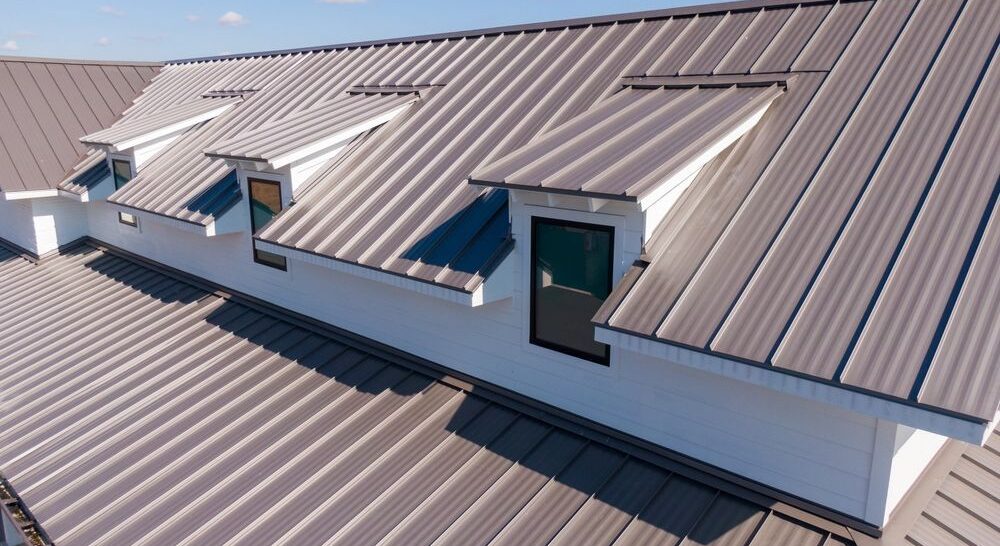
Within steel roofing, you have two main installation styles. Standing seam panels interlock at concealed seams, allow the metal to expand and contract with temperature changes without loosening fasteners, and are the industry standard for long-term performance. Screw-down panels cost less upfront but require fastener maintenance every 5 to 10 years to prevent leaks over time.
The style and material you choose affects both your cost and your long-term results more than any other factor in the decision.
The Real Benefits of a Metal Roof
Understanding the benefits of a metal roof starts with separating what is genuinely verified from what is marketing language. Here is what the data actually supports.
Lifespan that outpaces everything else in residential roofing
A properly installed standing seam steel roof lasts 40 to 70 years. Copper and zinc exceed 100 years in many documented cases. Compare that to the 15 to 25 years a homeowner in Michigan City realistically gets from asphalt shingles given the freeze-thaw cycle, lake-effect snow loads, and hail exposure in Northwest Indiana.
Energy performance you can measure on your utility bill
Metal roofing reflects solar radiation rather than absorbing it. Pre-painted and granular-coated metal panels can reflect up to 90 percent of solar radiation according to State Farm’s residential roofing data. The practical result is a reduction in cooling costs of up to 40 percent compared to traditional asphalt shingles in warm months. In Michigan City’s climate, the bigger energy win is on the heating side — a properly installed metal roof with adequate attic ventilation reduces air infiltration and keeps conditioned heat inside during winters that average 25 to 30 freeze-thaw events.
Fire resistance at the highest rated level
Metal roofing carries a Class A fire rating, which is the highest fire resistance classification available for roofing materials. It is noncombustible. For homeowners near wooded areas in LaPorte or Porter County, that classification matters both for safety and for insurance purposes.
Impact resistance built for Indiana’s storm season
Quality steel roofing products carry a Class 4 impact resistance rating, which is the highest category under UL 2218 testing standards. Indiana logged over 4,400 hail reports in 2022 and the storm corridor running through Northwest Indiana makes hail a realistic annual risk. Class 4 rated materials withstand impacts that would fracture or crack standard asphalt shingles. That is not just a durability benefit — it directly affects your insurance premiums, which we will cover below.
Minimal maintenance over its full lifespan
Unlike asphalt shingles, which require periodic inspection for granule loss, lifting edges, and flashing failures, a properly installed standing seam metal roof needs very little attention over its lifetime. The advanced coatings used on modern steel panels resist cracking, fading, and chalking. You are not repairing sections every few years the way you would with an aging shingle roof.
How Long Does a Steel Roof Last
How long does a steel roof last is one of the most commonly searched questions about metal roofing, and it gets answered vaguely more often than it should.
The straightforward answer: a properly installed standing seam steel roof lasts 40 to 70 years under normal residential conditions. Screw-down steel panels run 20 to 30 years before maintenance requirements become significant. The difference between those two numbers comes down almost entirely to installation method and fastener design.
What affects that lifespan in practice is your local climate and the quality of the installation. In Northwest Indiana, the aggressive freeze-thaw cycle is the primary stress factor on any roofing material. Standing seam steel handles it exceptionally well because the interlocking panel system allows thermal expansion and contraction without placing stress on fixed fastener points. A screw-down system does not have that flexibility, which is why fasteners need replacement every 5 to 10 years in cold climates to prevent leaks from developing at the penetration points.
The Metal Roofing Alliance notes that how long a steel roof last also depends on coating quality. Kynar 500 and Hylar 5000 fluoropolymer coatings are the industry benchmark for corrosion and UV resistance. Roofs installed with these coatings consistently reach the upper end of the lifespan range. Lower-grade coatings on discount products fade, chalk, and eventually allow the steel substrate to corrode, shortening the roof’s life by 10 to 20 years.
For Michigan City homeowners specifically, the answer to how long does a steel roof last under local conditions is 40 to 60 years for standing seam with quality coating, which is two to three times what you will get from an asphalt shingle roof in the same climate.
The Real Cons of Metal Roofing
A complete picture of metal roofing pros and cons means being direct about where metal falls short. There are three legitimate concerns that homeowners should understand before committing.
The upfront cost is significantly higher than asphalt
This is the most common reason homeowners pause. According to State Farm, the average installation cost for a metal roof on a 2,300 square foot home is approximately $11,000. Indiana-specific data from 2025 puts the range between $9,000 and $38,000 depending on material type and installation style, with standing seam steel installations in the Northwest Indiana market typically landing between $16,000 and $28,000 for a standard residential home.
That is two to three times the cost of an architectural asphalt shingle replacement in the same market. The financial case for metal roofing works on a long-term basis, but if you are planning to sell your home in the next five years or have a fixed replacement budget, the higher upfront number is a real constraint that should factor into your decision.
Noise during rain and hail without proper insulation
Metal roofing is louder than asphalt shingles during rain and hail events. This surprises some homeowners because they assume modern metal roofs have solved this. The material itself still transmits sound more directly than a dense shingle layer. The solution is adequate attic insulation and a solid sheathing layer beneath the panels, which most quality installations include. If your home already has good attic insulation, the noise difference in day-to-day rain is minimal. During heavy hail, you will hear it. Some homeowners find that reassuring. Others do not.
Softer metals dent from large hail
Steel is resistant to denting under most hail conditions, but aluminum and copper panels are softer and can show impact marks from large hail events or falling branches. In Indiana’s storm season, this is worth factoring into your material choice. Steel with a Class 4 impact rating handles the hail events typical to Northwest Indiana without cosmetic damage. If you are choosing aluminum for its corrosion resistance or weight benefits, understand that denting is a realistic possibility in a heavy hail year.
There is also a less-discussed issue with thermal expansion. Temperature shifts cause metal panels to expand and contract, and if fasteners are not installed correctly or if a screw-down system ages without maintenance, those movements create noise inside the home and eventually allow small gaps to form at penetration points. This is not a problem with quality standing seam installations but is worth asking about when reviewing any metal roofing proposal.
What Metal Roofing Does to Your Insurance and Home Value
This is where the benefits of a metal roof become financially concrete in a way most homeowners do not fully account for when comparing upfront costs.
Insurance premium savings
Indiana homeowners with a Class 4 impact rated metal roof typically qualify for insurance discounts ranging from 5 to 35 percent on their dwelling coverage. In dollar terms, that translates to $200 to $800 per year in premium savings depending on your insurer and policy. Over a 40-year roof lifespan, that compounds to between $8,000 and $32,000 in cumulative insurance savings.
Not every insurance company offers the same discount, and some require specific documentation of the Class 4 rating before adjusting your premium. Contact your insurer before installation, get confirmation of the discount in writing, and make sure your roofing contractor provides the manufacturer’s Class 4 certification document at project completion.
Resale value
A metal roof increases resale value by up to 6 percent according to current market data from Angi and verified through multiple real estate studies. On a $300,000 home in the Michigan City or Valparaiso market, that is an $18,000 increase in property value. Homeowners typically recoup 60 to 85 percent of the installation cost at resale, with some markets recovering as much as 95 percent.
Beyond the percentage, there is a practical reality that affects every sale: buyers and real estate agents know the difference between a home with a 3-year-old metal roof and a home with a 19-year-old asphalt shingle roof. The metal roof eliminates the inspection contingency conversation that consistently reduces sale prices or stalls deals at closing. If you plan to sell within the next 10 to 15 years, a metal roof is a selling point that asphalt cannot match.
Metal Roof vs. Asphalt Shingles: The Cost Comparison That Actually Matters
The upfront cost comparison is the one that stops most conversations. Metal costs more. That is simply true. But the comparison that determines which option costs less over time looks different.
A quality asphalt shingle roof installed in Michigan City today costs between $10,000 and $16,000 for a standard home. It will likely need replacement in 18 to 22 years in Northwest Indiana’s climate, meaning you will spend that money again before a metal roof installed today would even approach the midpoint of its lifespan.
Add in the inspection and repair costs that accumulate on an aging shingle roof ($600 to $1,500 every few years after year 15), the energy cost difference (up to 40 percent cooling savings), and the insurance premium differential, and the long-term math begins to close the gap considerably.
For homeowners who plan to stay in their home for 20 or more years, metal roofing almost always wins on total cost of ownership. For homeowners planning to move within 10 years, asphalt shingles remain the more financially practical choice because you will not live in the home long enough to recoup the premium.
If you want to compare asphalt shingle roofing options for your home before deciding, we can walk you through both in a single conversation.
Is Metal Roofing the Right Choice for Michigan City and Northwest Indiana?
The climate answer is yes, unambiguously. Northwest Indiana puts more stress on roofing materials than most of the country and metal roofing pros and cons tilt more favorably here than they do in gentler climates.
The freeze-thaw cycle that shortens asphalt shingle lifespan to 15 to 22 years in this region does not have the same effect on standing seam steel. The lake-effect snow loads that create ice dam risk on homes without adequate underlayment are better handled by a full metal roof system with proper ventilation. The hail events that move through LaPorte and Porter County every spring and summer are deflected by Class 4 steel without the granule loss that same hail causes on asphalt.
The practical tradeoff in this market is entirely about budget and timeline. If you can absorb the higher upfront investment and you plan to stay in the home, metal roofing is the single best roofing decision you can make for a Northwest Indiana property.
Homeowners across our service area from La Porte County to Valparaiso are increasingly making this choice, and we are seeing the shift accelerate as insurance savings become a more prominent part of the financial conversation.
5 Questions to Ask Before Hiring a Metal Roofing Contractor
Not every contractor who installs metal roofing has the experience to do it correctly. The installation tolerances on standing seam metal are tighter than on asphalt shingles, and mistakes at the flashing, ridge, and penetration points cause leaks that are expensive to diagnose and fix after the fact.
- Ask whether the contractor has specific standing seam experience and can provide references for metal installations.
- Ask what brand and coating specification they are using, and verify it includes a Kynar or equivalent fluoropolymer coating.
- Ask about the warranty structure separately for materials and workmanship.
- Ask whether the installation includes a full ice-and-water shield layer beneath the panels, which is critical in Michigan City’s climate.
- Ask for the Class 4 impact rating certification document so you have it when you call your insurer about a premium adjustment.
A contractor who hesitates on any of those questions or cannot produce documentation deserves more scrutiny before you sign anything. A professional roof inspection of your current roof is also a useful first step before committing to any replacement material, because understanding the condition of your decking and ventilation system shapes what the replacement needs to include.
Frequently Asked Questions
What are the biggest benefits of a metal roof compared to asphalt shingles?
The benefits of a metal roof over asphalt are most significant in four areas: lifespan (40 to 70 years versus 15 to 25 years in cold climates), energy performance (up to 40 percent reduction in cooling costs), fire resistance (Class A rating versus Class C for standard asphalt), and insurance savings (5 to 35 percent premium reduction for Class 4 impact rated materials). The tradeoff is a higher upfront installation cost, which averages $11,000 to $28,000 for a standard home depending on material and style.
How long does a steel roof last on a house in Indiana specifically?
How long does a steel roof last in Northwest Indiana depends largely on the installation style. A standing seam steel roof installed with quality fluoropolymer coating will last 40 to 60 years under Indiana’s climate conditions, which includes heavy freeze-thaw cycling, lake-effect snow, and seasonal hail. Screw-down steel panels run 20 to 30 years before fastener maintenance becomes significant. Indiana’s climate is harder on all roofing materials than the manufacturer specifications suggest, but standing seam steel is the one category that consistently performs at the upper end of its rated lifespan here.
Does a metal roof actually lower homeowners insurance in Indiana?
Yes, in most cases. Insurers offer discounts for Class 4 impact rated metal roofing because it reduces the likelihood of a storm damage claim, which is the most common residential insurance claim category in Indiana. The typical discount ranges from 5 to 35 percent depending on your insurer and location, translating to $200 to $800 per year in premium savings. Contact your insurance agent before installation to confirm eligibility and get the discount terms in writing.
What is the biggest problem with metal roofs?
The most common real-world complaint is noise during hail events, which is louder than with asphalt shingles unless the home has adequate attic insulation and solid sheathing beneath the panels. The second most common issue is thermal expansion on screw-down systems, where fasteners loosen over time and allow small gaps at penetration points if not maintained. Both issues are manageable with the right installation approach. Standing seam systems address the fastener issue entirely, and proper insulation resolves the noise concern.
Is this the complete picture of metal roofing pros and cons for a Michigan City homeowner?
The full metal roofing pros and cons evaluation for a Northwest Indiana homeowner comes down to this: if your timeline is 20-plus years and your budget supports the upfront investment, metal roofing is financially superior over the life of the roof when you account for energy savings, insurance savings, reduced maintenance, and resale value. If your horizon is shorter or the upfront number is a hard constraint, quality architectural asphalt shingles remain a solid choice. The decision is not which material is objectively better. It is which material fits your specific situation.
Ready to get an accurate quote for your home? Weldon Roofing installs both metal and asphalt roofing systems across Michigan City and Northwest Indiana. We are GAF certified, locally owned, and will give you a straight recommendation based on your roof’s actual condition and your goals.
Call (219) 666-8345 or contact us here to schedule your assessment.
Weldon Roofing and Construction. Michigan City, Indiana. Serving all of Northwest Indiana including La Porte County, Porter County, and Lake County.