
You wake up after a week of heavy snow and notice a thick ridge of ice sitting along the edge of your roof, with icicles hanging off it like teeth. It looks kind of pretty, honestly. But if you’ve lived in a cold climate for a few winters, you probably already know it’s trouble.
That ridge is an ice dam, and it’s one of the most common reasons homeowners end up with wet ceilings in the middle of winter. If you’re wondering what to do about ice dams on your roof, the short answer is this: deal with the ice carefully now, then fix the underlying cause so it doesn’t happen again.
Let’s walk through how ice dams form, what to do right away, and how to stop them for good.
What Is an Ice Dam, Exactly?
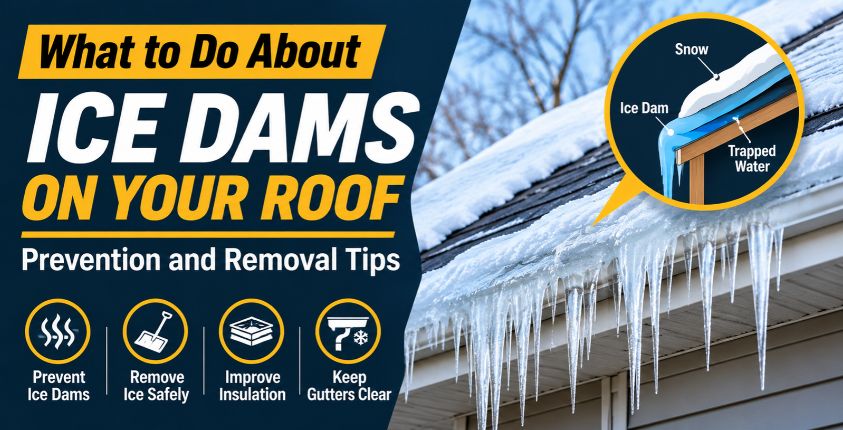
An ice dam is a wall of ice that builds up along the lower edge of your roof. It traps meltwater behind it, so the water has nowhere to go. And since roofs are designed to shed water downhill, not hold it, that trapped water starts working its way under your shingles.
Here’s how it happens, in plain terms:
- Heat from your house escapes into the attic.
- That warmth heats the roof deck from underneath, and the snow on top starts to melt.
- The meltwater runs down toward the eaves, which stay cold because they hang past the warm part of the house.
- The water refreezes at the edge, and the ice slowly grows into a dam.
- More water backs up behind it and seeps under the shingles.
So the real culprit isn’t the snow or the cold. It’s uneven roof temperature, caused by heat leaking from your living space. Keep that in mind, because it’s the key to preventing them.
Why Ice Dams Are a Bigger Deal Than They Look
A little ice at the edge of a roof might seem harmless. It isn’t, at least not when it sticks around. Ice dam roof damage can show up in a few ways:
- Water stains and leaks on ceilings and along exterior walls
- Soaked insulation, which makes the heat loss even worse
- Mold and mildew in the attic or inside walls
- Damaged shingles, gutters, and fascia from the weight of the ice
- Rotted roof decking if it keeps happening winter after winter
A gutter packed with ice can get so heavy that it pulls away from the house entirely. And if you’ve had repeated leaks, it may be time to ask whether the roof is simply worn out. Our guide on the 5 signs you need a new roof can help you figure that out.
Signs You Have an Ice Dam Problem
Not every icicle means you have a dam. But watch for these roof ice dam signs:
- A thick band of ice along the eaves that keeps growing
- Large icicles hanging from the gutters or roof edge
- Water stains or dripping inside the house once snow starts melting
- Snow melting unevenly, with bare patches on one part of the roof
- Frost on the underside of the roof deck when you look in the attic
What to Do Right Now: Safe Ice Dam Removal
If you’ve already got a dam, you want to act quickly, but carefully. The wrong approach can do more harm than the ice itself.
Use a Roof Rake
A roof rake is a long-handled tool that lets you pull snow off the lower few feet of your roof while you stand on the ground. Removing the snow takes away the thing that’s melting and refreezing. Work gently, and don’t scrape all the way down to the shingles, since that can tear off granules.
This is the safest and most effective short-term step, and it’s best done before a dam forms.
Melt Channels with Calcium Chloride
Fill a long tube, such as a nylon stocking or sock, with calcium chloride ice melt and lay it vertically across the dam so it extends over the edge of the roof. It’ll melt a channel that lets trapped water drain off. This won’t get rid of the dam, but it can stop water from backing up under your shingles.
Skip the rock salt. It can damage shingles, corrode metal, and kill the plants underneath your eaves.
Call a Pro for Serious Dams
Some dams are thick, stubborn, or sitting on a steep or high roof. In those cases, calling a professional is the smart move. Roofers often use low-pressure steam, which melts ice without hammering on your shingles. It’s slow, careful work, and it keeps you off an icy ladder.
What Not to Do
Honestly, this list matters as much as the one above.
- Don’t chip at it with an axe, hammer, or pickaxe. You’ll almost certainly damage the roofing, and it’s easy to hurt yourself.
- Don’t pour boiling water on it. It can refreeze, crack shingles, or make things slippery below.
- Don’t climb onto an icy roof. Ever. It isn’t worth it.
- Don’t use a heat gun or torch. That’s a fire risk and can damage roofing materials.
If water is already coming inside, put buckets and tarps down, move valuables out of the way, and call a roofer. Quick temporary steps limit the damage, but they aren’t a repair.
How to Prevent Ice Dams for Good
Removal is a short-term fix. If you want to actually solve the problem, you’ve got to deal with the heat escaping into your attic. Here’s how to prevent ice dams long-term.
1. Seal Air Leaks First
Warm air sneaks into attics through gaps you’d never notice: around recessed lights, attic hatches, chimneys, plumbing stacks, and electrical wiring. Sealing these with caulk or spray foam is often the cheapest and most effective step you can take. Do this before adding insulation, since insulation alone won’t stop air movement.
2. Add Attic Insulation
Most cold-climate homes need a good deal of insulation in the attic. Building codes vary by region, so check what’s recommended for your area. Even-depth insulation across the whole attic floor keeps living-space heat where it belongs.
3. Improve Attic Ventilation
A well-ventilated attic stays close to the outdoor temperature, which keeps your roof deck cold and even. Soffit vents let cool air in at the bottom, and ridge vents let warm air out at the top. Make sure insulation isn’t blocking the soffit vents. Baffles can keep that airflow path clear.
4. Keep Gutters Clean
Debris-filled gutters trap water and freeze faster. Clear them out in the fall so meltwater has somewhere to go.
5. Ask About Ice and Water Shield
If you’re replacing your roof anyway, this self-adhering membrane goes along the eaves, beneath the shingles. It won’t stop dams from forming, but it helps keep backed-up water out of your home.
6. Get a Fall Inspection
A yearly check before the snow arrives catches weak spots early. Learn more about our roof inspection services if you’d like someone to look before winter sets in.
When to Call Weldon Roofing
Reach out if you’ve had ice dams more than one winter in a row, water is getting inside, or you can see damaged shingles, flashing, or gutters. Same goes if you just aren’t sure whether your attic is properly insulated and ventilated.
At Weldon Roofing, we look at the whole picture: the roof, the attic, and the reasons the ice keeps forming. Then we explain what we find in plain language and give you honest options. If there’s damage, take a look at our roof repair services, or contact us to schedule a visit before the next storm.
Frequently Asked Questions
1. Can ice dams damage my roof?
Yes. They can lift shingles, force water under roofing materials, rot decking, and pull gutters loose. Even if you can’t see damage outside, water can soak insulation and ceilings inside, so it’s worth checking your attic after a bad dam.
2. How do I get rid of an ice dam quickly?
The safest quick approach is to remove snow from the roof edge with a roof rake and melt a drainage channel with calcium chloride in a nylon stocking. For thick or high dams, call a professional who uses steam. Avoid chipping at the ice, since that’s how most roof damage happens.
3. Does homeowners insurance cover ice dam damage?
Often, yes, at least for the resulting water damage inside your home, but policies differ. Some cover sudden water damage from ice dams, and others have exclusions. Check your policy or call your insurer, and take photos of everything before cleanup.
4. What’s the best way to prevent ice dams?
Stop the heat from reaching your roof. Seal air leaks in the attic, add enough insulation, and make sure the attic is well ventilated. Those three steps address the root cause, rather than just the ice.
5. Are icicles always a sign of an ice dam?
Not always. A few icicles can form on a normal roof on a sunny day. But large icicles, thick ice along the eaves, or water stains inside after a thaw point toward an ice dam and a likely heat-loss problem.